

September 01, 2026
A giant sequoia alive today may have been a seedling before the very first Olympic Games. That is not an exaggeration for effect. It is roughly what the ring counts say.
What the ring counts also say, and this is the part that rarely makes the postcards, is that we have been misdating these trees for a century. The famous ages have been revised downward again and again, and the biggest sequoias turn out not to be the oldest.
Here is what is actually known about how long sequoias and redwoods live, how anyone can tell, and why the numbers keep shrinking.
How Long Do Sequoias and Redwoods Live?
Both species are extraordinarily long-lived, but not equally so, and neither is the oldest tree on Earth.
Verified ages come from counting rings on cut or fallen trees. Ages given for living giants are estimates.

What a 3,200-Year-Old Tree Has Lived Through
Numbers like three thousand years do not land until you hang events on them. The President, a giant sequoia in Giant Forest, is commonly estimated at around 3,200 years old. If that estimate is close, it sprouted in the late twelfth century BC.

The tree was already a thousand years old when Rome fell. It was middle-aged at the Battle of Hastings. It had been growing for three millennia when Congress finally made it illegal to cut it down. And it is still adding wood.
How Do We Actually Know a Tree's Age?
By counting rings, which is simple in principle and challenging in practice when the tree is twenty feet across.
The reliable method requires a cross-section, which means the tree has to be dead. Nearly every confirmed sequoia age comes from a stump or a fallen giant. For living trees, foresters use an increment borer, a hollow drill that extracts a pencil-thin core. The trouble is that a borer reaches maybe two feet in. On a sequoia, two feet does not get you a tenth of the way to the center.
So the age of any living giant sequoia is an estimate, built from growth rates measured near the bark and extrapolated inward. This is why published ages come with wide margins, and why they move.

The Ages Keep Getting Smaller
For most of the last century, people assumed the largest sequoias were the oldest. It seemed obvious. A National Park Service review of sequoia age estimates traces what happened when that assumption met the evidence.
-
General Sherman. Once put at 3,500 to 4,000 years, on the reasoning that nothing so large could be young. The current Park Service estimate is around 2,200.
-
The Grizzly Giant. Early researchers claimed 3,800 years and called it the oldest living sequoia. Its estimate has fallen further than Sherman's.
-
General Grant. Long believed to be well over 2,000 years old. Now estimated closer to 1,650.
-
The Muir Snag. John Muir reported counting over 4,000 rings on it in 1875. Nobody has reproduced that count, and it is now regarded as almost certainly mistaken. Historic claims of 11,000 rings are not taken seriously at all.
The correction is not that sequoias are young. It is that size is a poor clock. A sequoia grows fast in good conditions and slowly in poor ones, so an enormous tree may simply have had a better spot than a smaller, older neighbor a hundred yards away.
The Oldest Sequoia, and the Oldest Tree
The oldest giant sequoias ever confirmed by ring count were stumps, and the oldest of them came in at roughly 3,200 to 3,270 years. Among living trees, the President is the one most often cited near that mark, though as an estimate rather than a count.
None of this makes the sequoia the oldest tree on Earth. That distinction belongs to a Great Basin bristlecone pine named Methuselah, in California's White Mountains, at over 4,850 years. It is a scrubby, weathered thing that would fit in a suburban yard. Its location is kept secret. The oldest tree in the world is not a giant, and the giants are not the oldest.
Coast redwoods do not reach sequoia ages. They commonly live 500 to 1,200 years and can approach 2,200. What they do instead is refuse to die. A coast redwood cut to the ground will sprout again from its own roots and burls, so a redwood you are standing next to may be a young trunk on a root system thousands of years old.
Do Sequoias Die of Old Age?
Not really, and this is the strangest fact about them. There is no known point at which a giant sequoia's cells give out. Old trees keep growing, keep producing cones, and by some measures grow faster in old age than in youth.
What kills them is gravity. A sequoia's roots are shallow, spreading wide instead of deep, and centuries of fire, erosion, and root damage eventually undermine one side of a trunk weighing well over a thousand tons. The tree topples. As Save the Redwoods League puts it, sequoias do not so much die as fall over. Toppling is the leading natural cause of death, and a giant sequoia that never lost its footing might, in theory, simply continue.
A Short History of Sequoia National Park
The trees were protected late, and barely in time.
Word of the giant sequoias reached the wider world in the early 1850s, and the response was to cut down the most impressive specimens to prove they existed. Logging spread through the groves for the next forty years. Converse Basin, one of the greatest sequoia forests anywhere, was almost entirely felled.
In September 1890 Congress established Sequoia National Park, the second national park in the country after Yellowstone, and the first ever created to protect a living organism rather than a landscape. General Grant National Park followed within days, and was folded into Kings Canyon National Park fifty years later.
Enforcement came from an unlikely quarter. In 1903 the Buffalo Soldiers, Black cavalry regiments of the U.S. Army, patrolled the parks. Their commander, Captain Charles Young, became the parks' superintendent, the first Black superintendent of any national park. He built the first roads into the groves and pushed illegal loggers, grazers, and poachers out.
The Biggest Tree Ever Cut Down
Two candidates, both destroyed while people watched. The Crannell Creek Giant, a coast redwood logged in the 1940s, appears from the recorded measurements to have been larger than General Sherman. The Discovery Tree, felled at Calaveras in 1853 purely so the stump could be exhibited, was later ring-counted at more than 1,200 years.
Both figures come from the people doing the cutting. They are the best we have, and they are the reason nobody can say with certainty how big or how old the greatest sequoia ever was.
Frequently Asked Questions
How old is the oldest sequoia tree?
The oldest confirmed by ring count was about 3,200 to 3,270 years, measured on a stump. Among living trees, the President is often estimated near 3,200 years, but that is an estimate, not a count.
How long do redwood trees live?
Coast redwoods commonly live 500 to 1,200 years and can reach roughly 2,200. Giant sequoias typically live 1,000 to 2,000 years and can exceed 3,000.
How old is the General Sherman tree?
The Park Service currently estimates about 2,200 years. Earlier figures of 3,500 or even 4,000 years were based on the assumption that the largest tree must be the oldest, which turned out to be wrong.
Is the sequoia the oldest tree in the world?
No. That is Methuselah, a Great Basin bristlecone pine in California's White Mountains, at over 4,850 years old. Sequoias are the largest trees, not the oldest.
When was Sequoia National Park founded?
September 1890. It was the second national park in the United States and the first created specifically to protect a living organism.
Sources
The information in this article was drawn from the following authoritative sources. Each link goes to the original publication.
National Park Service: Estimated Ages of Some Large Giant Sequoias. The research history behind falling age estimates for Sherman and the Grizzly Giant.
National Park Service: The General Sherman Tree. Current age estimate and growth data.
National Park Service: General Grant Tree. Revised age and official measurements.
Save the Redwoods League: Giant Sequoias. Longevity, root structure, and how sequoias actually die.
The Bottom Line
Giant sequoias live one to two thousand years as a matter of course, and the oldest confirmed reached about 3,200. Coast redwoods live long but not that long, and make up for it by regrowing from their own roots. Neither is the oldest tree alive. A wind-scoured bristlecone pine has both of them beaten by more than fifteen centuries.
The most useful thing to take from the ring counts is humility about our estimates. Every famous age in this article was once believed to be a thousand years higher. The trees did not change. Our methods did.
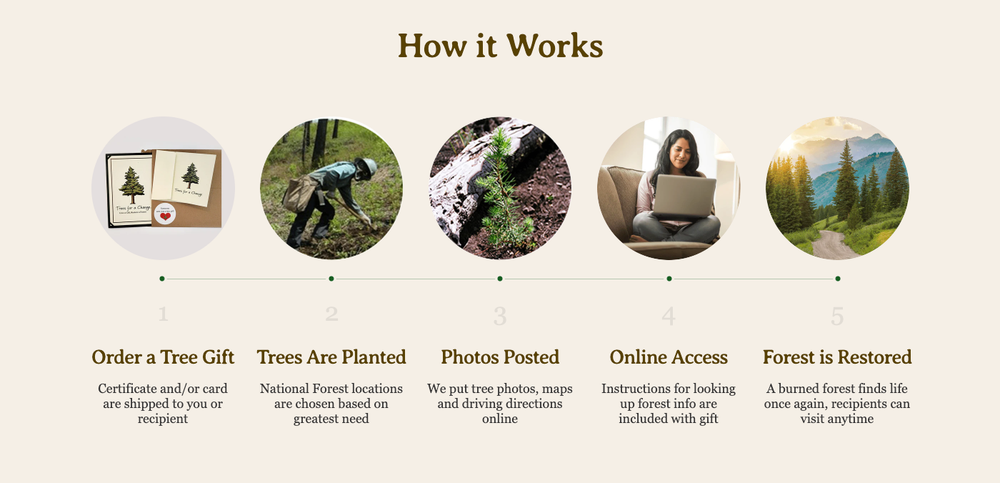
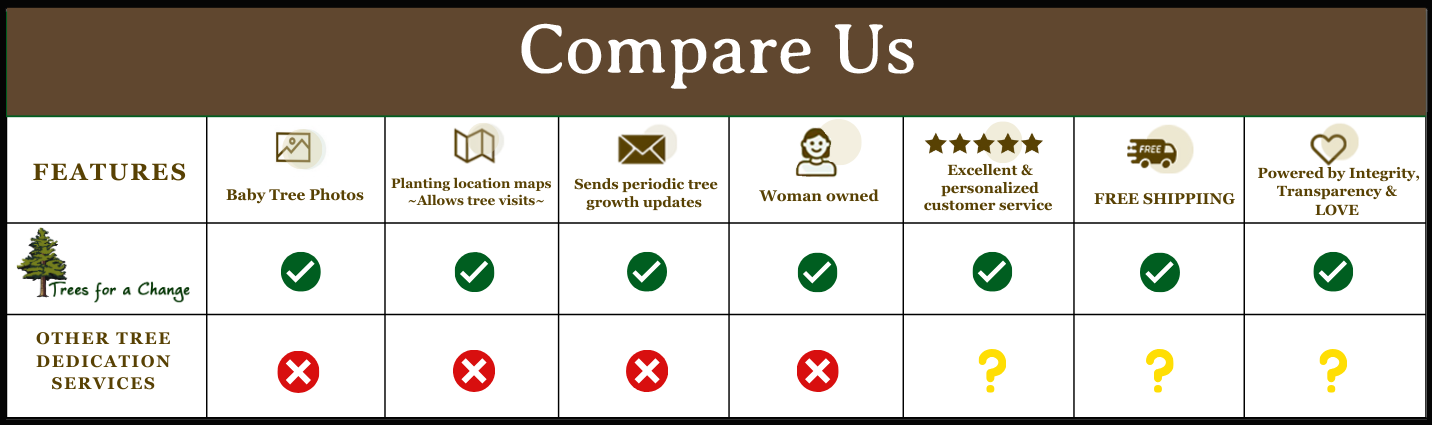
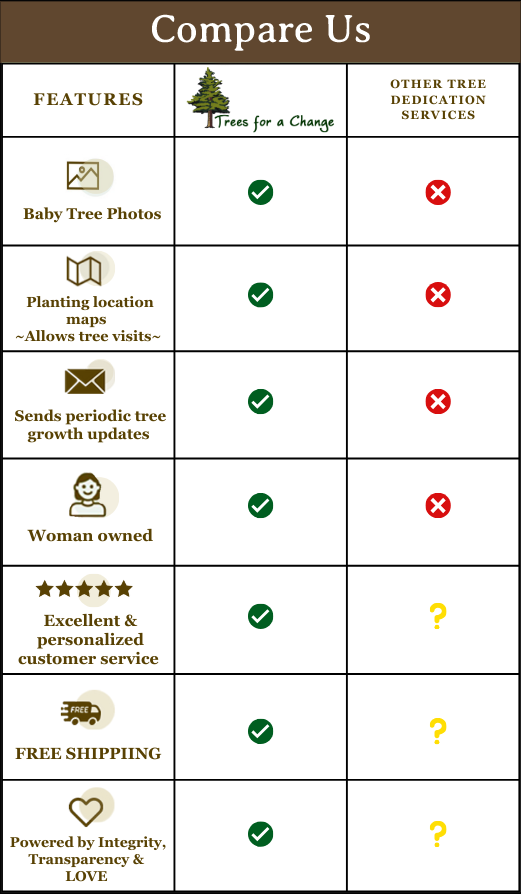
And the arithmetic of loss runs the other way entirely. A sequoia takes two millennia to become the thing people drive across the country to see, and thirteen days to cut down. Since 2007, Trees for a Change has worked with the Forest Service to plant more than 240,000 trees in fire-damaged U.S. National Forests, giant sequoia among them. Nobody planting those seedlings will see what they become, that will be for future generations.