

September 03, 2026
Growing a giant sequoia is entirely possible. They germinate from seed, they tolerate a surprising range of climates, and they grow faster than most people expect. Nurseries sell them, and thousands of people have planted them successfully outside California.
The complication is not difficult. It is scale. A giant sequoia planted today will outgrow a suburban lot within a human lifetime and keep going for another two thousand years, and its root plate will spread further than the property line long before that.
This guide covers the honest version: where they will actually grow, how fast, how to germinate seed, what the roots do, which cultivars suit smaller spaces, and how to decide whether your site is genuinely suitable before you put one in the ground.
Start With the Space Question
Nearly every problem with a planted giant sequoia traces back to this, so it belongs before the how-to rather than after it.

A mature giant sequoia in cultivation reaches 80 to 130 feet with a canopy 30 to 40 feet across, and it does that within a century. In the wild it goes far beyond that. The roots are the real constraint: 6 to 14 feet deep with no taproot, spreading 100 feet or more in every direction.
So the practical minimum is a large open site, well away from foundations, driveways, septic tanks, drains, and overhead lines. Parks, campuses, farmland, and large rural properties suit them. A standard residential back garden does not, and planting one there creates a problem for whoever owns the place in forty years.
It is worth being clear-eyed about the dimensions a mature tree eventually reaches before deciding, because the tree does not stop at a convenient size.
Where Can Giant Sequoias Grow?
Hardiness and climate
Giant sequoia is generally hardy in USDA zones 6 through 8, and several cultivars have proven reliable in zone 5. Trees have tolerated temperatures from roughly minus 12 to 104 degrees Fahrenheit.
Its native groves are milder than that range suggests, with January minimums around 21 to 34 degrees and July maximums around 75 to 84. Two things do the most damage: sustained extreme heat, and sudden hard freezes after mild spells. A tree that handles a steady cold winter can be killed by a late frost following a warm February.
They do well across the Pacific Northwest, the upper Midwest and Northeast within their zones, the UK and much of northern Europe, and New Zealand. They struggle in hot humid climates. In places like Texas and the deep South, the combination of summer heat, humidity, and alkaline soils makes long-term success unlikely, and coastal redwood does even worse there.
Sun and soil
Sequoias need full sun, without exception. Giant sequoias are shade intolerant, and a seedling in shade will languish rather than grow slowly.
Soil should be well drained, from sandy loam to clay loam, with a pH around 5.5 to 7.5. They handle neutral to slightly alkaline ground better than coast redwoods do. Heavy clay needs amending with organic matter before planting, because standing water around the root collar kills young trees quickly.
Water
Young trees need consistent moisture and do not tolerate drought while establishing. Mature trees move enormous volumes of water, which in the wild comes from Sierra snowmelt. Away from that, a mature sequoia on a dry site will show stress in the crown long before anything else goes wrong.
How Fast Do Giant Sequoias Grow?
Faster than almost any tree you could plant beside them, which is part of what makes them a hazard in small spaces.

|
Age |
Height |
What that means on the ground |
|---|---|---|
|
Year 1 |
4 to 8 inches |
A seedling in a pot, needing shade and steady moisture |
|
Year 10 |
About 30 feet |
Already taller than a single-story house |
|
Year 20 |
40 to 60 feet |
Into the utility lines if planted near a road |
|
Year 50 |
Over 100 feet |
A landmark tree, still nowhere near mature |
|
Year 100+ |
150 feet and rising |
Continues adding wood for another two thousand years |
Sources: Guinness World Records, published horticultural growth data, and U.S. Forest Service silvics. Rates assume full sun, adequate water, and good drainage. Growth is slower in cooler or drier sites.
In cultivation, expect roughly 12 to 24 inches of height a year once established, and up to three feet a year on the best sites. Mature trees never really slow down. A 2,000-year-old sequoia still adds around 40 cubic feet of wood annually, which is more than most trees accumulate in their entire lives.
Growing From Seed
Seed is cheap, genetically diverse, and slow. It is the right route if you want several trees or you are restoring land, and the wrong route if you want a specimen tree in the ground this year.
Cold stratification
-
Soak the seed. Many growers leach seed in running water for about 24 hours, then surface dry it. This helps break dormancy.
-
Chill it. Stratify (prep the seed by mimicking winter) in a sealed bag, with or without damp sand, at roughly 34 to 40 degrees Fahrenheit. Published protocols range from two weeks to two months, with about six weeks a common target.
-
Check for mold. Inspect the bag periodically. A moldy batch is worse than an unstratified one, so discard affected seed rather than sowing it.
Stratification is not strictly required, but it substantially improves both the speed and rate of germination. Controlled trials report germination anywhere from 30 to 73 percent depending on seed source and method. In the wild it is often below 10 percent.
Sowing
Sow on the surface or barely covered, no more than about an eighth of an inch deep. Giant sequoia seed needs light to germinate, and seed buried deeper frequently fails to emerge at all. This is the single most common reason home attempts produce nothing.
Use a well-draining seed-starting mix and keep it consistently moist without waterlogging. Germination temperature is best around 60 to 70 degrees Fahrenheit. Much cooler stalls it, much warmer inhibits it.
First-year care
Keep seedlings out of direct sun for the first couple of months, then harden them off gradually into full light. Damping-off is the main killer at this stage, so airflow and restraint with watering matter more than fertilizer.
Expect four to eight inches of growth in year one. That is normal. The explosive growth comes later.
Starting From a Seedling or Sapling
For most people planting one or two trees, buying a seedling is the sensible route. It removes the two hardest years and gets you a tree with a known cultivar and form.
A few things to check before buying:
-
Root condition. Reject anything root-bound in a small pot. A circling root system on a shallow-rooted species is a long-term structural problem.
-
Grafted or seed grown. Named cultivars are usually grafted. Check the graft union sits low and looks clean.
-
Size at purchase. Smaller stock establishes better than large stock. A two-foot tree will often overtake a six-foot tree within a few years.
-
Origin and hardiness. Seed source affects cold tolerance. Stock raised in a climate like yours will do better than stock from a much milder one.
Plant in autumn or early spring, at the same depth the tree sat in its pot, in a wide hole with the surrounding soil loosened well beyond the root ball. Mulch, keep the mulch off the trunk, and water deeply and infrequently rather than little and often.
The Root System and Where You Plant
This deserves its own section because it is the part people find out about too late.
Giant sequoias have no taproot. The entire root system is a wide, shallow plate, typically 6 to 14 feet deep, with lateral roots reaching 100 to 150 feet from the trunk and occasionally past 200. A mature tree can draw on several acres of soil.
Three practical consequences:
1. Keep distance from structures. Foundations, retaining walls, drains, septic systems, and paving are all at risk within the root zone. Distance is cheaper than remediation.
2. Protect the soil around it. Compaction from vehicles, foot traffic, or construction damages the shallow roots directly. This is exactly why parks close trails around famous trees.
3. Understand the failure mode. These trees rarely die of disease. They fall over when saturated ground releases a shallow root plate. Site them where a fall would not be catastrophic.
Cultivars Worth Knowing
If the straight species is too much tree, several selections are more manageable or better suited to cold climates.
|
Cultivar |
Hardiness |
Why choose it |
|---|---|---|
|
'Hazel Smith' |
Zone 5 to 6 |
Striking blue foliage, better cold hardiness than the species, and fast, around 30 ft in 10 years |
|
'Pendulum' |
Zone 6 |
A narrow weeping pillar only a few feet wide, sculptural and space-efficient |
|
'Glaucum' |
Zone 6 |
Blue-green foliage, slower and narrower than the species |
|
'Von Martin' |
Zone 6 |
A dwarf selection, roughly a quarter the growth rate of the species |
|
'Albospica' |
Zone 6 |
Shrubby dwarf with white-speckled new growth, for a feature rather than a canopy tree |
Sources: American Conifer Society registration records and horticultural references. Hardiness ratings vary by seed source and site. 'Hazel Smith' was selected at Watnong Nursery in New Jersey.
Note that 'Pendulum' and the dwarf forms solve the height problem, not the root problem. A narrow tree still spreads roots. For a small garden, the dwarf selections are the only genuinely safe option.
Ongoing Care
Established giant sequoias are undemanding, which is part of their appeal.
-
Watering: Deep, infrequent soaking during the first several years and through droughts afterward. Established trees on suitable sites need little.
-
Feeding: Rarely necessary. A balanced slow-release feed in spring for young trees is plenty. These are not hungry plants.
-
Pruning: Almost none. Remove dead or damaged limbs only. Never top a sequoia, and never limb it up for the sake of tidiness.
-
Pests: Few serious problems. Aphids on new growth are the usual complaint, and the tannin-rich wood resists rot and boring insects well.
-
Mulch: A wide ring, kept clear of the trunk, protects the shallow roots and holds moisture.
Common Mistakes
1. Burying the seed. Anything deeper than about an eighth of an inch usually fails. This alone accounts for most unsuccessful home germination.
2. Planting too close to a building. The most common and least reversible error. Judge by the mature root spread, not the size at purchase.
3. Planting in shade. A shaded sequoia does not grow slowly. It declines.
4. Overwatering seedlings. Damping-off kills far more young sequoias than drought does.
5. Expecting a mature tree quickly. Even at full speed, this is a project measured in generations rather than seasons.
If You Do Not Have the Space
Most people asking how to grow a giant sequoia are not running an arboretum. They want a connection to a tree like the ones in the photographs, and a residential lot cannot honestly provide it.
There is a straightforward alternative to planting a sequoia in your backyard, and it is what the species actually needs right now. Wildfires in 2020 and 2021 killed an estimated 13 to 19 percent of all large giant sequoias on Earth. Those fires burned hot enough to destroy the pinecones, so trees will not regenerate on their own.
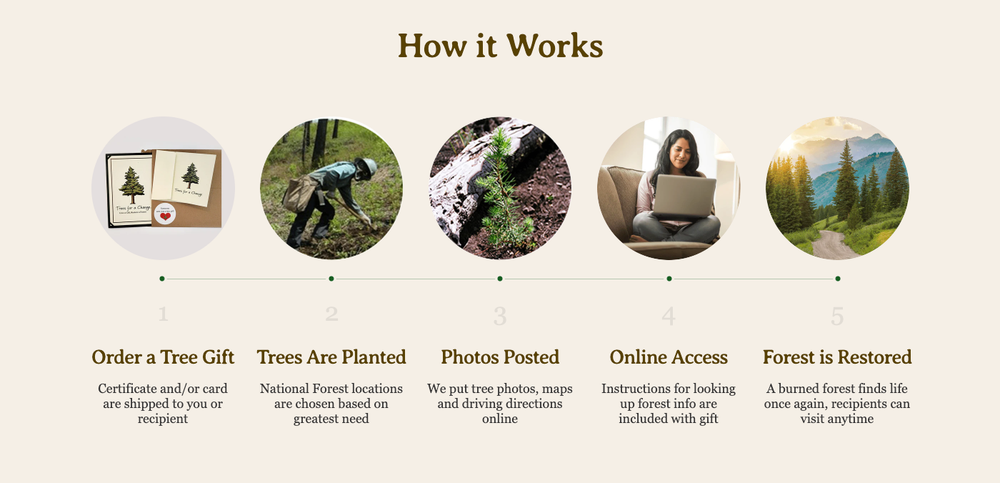
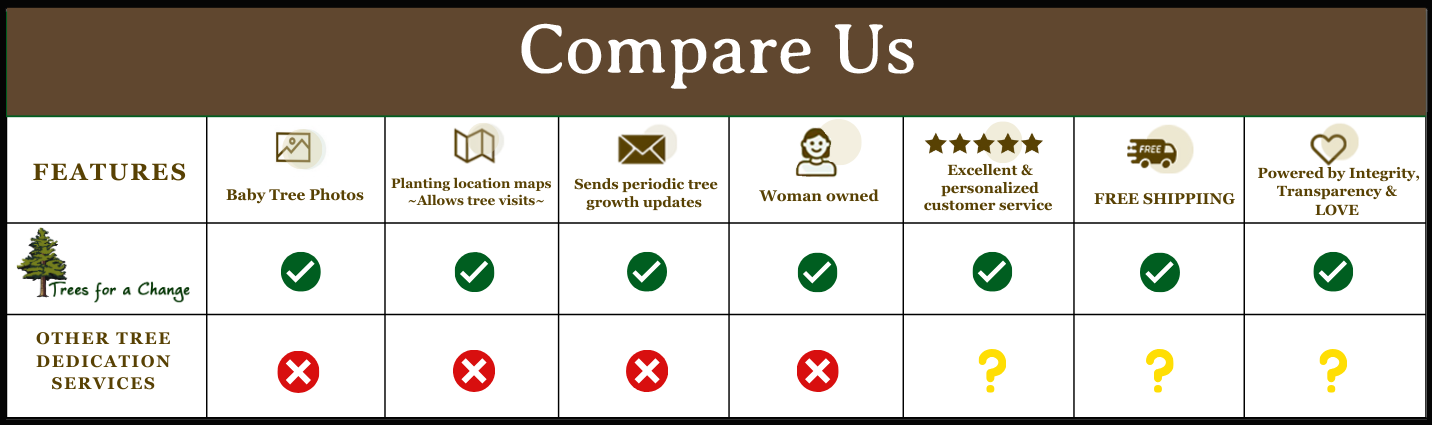
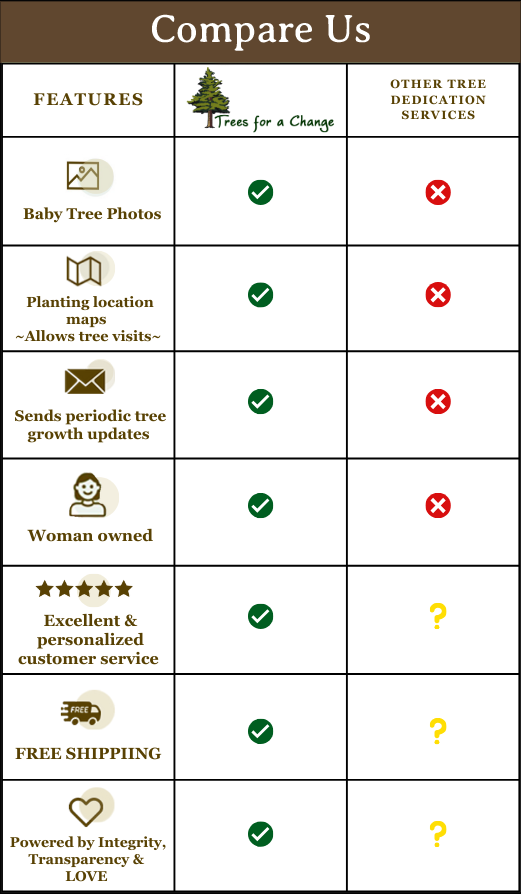
Organizations like Trees for a Change allow you to plant trees in someone's name as a gift and help restore badly damaged fire-burned forests. Since 2007, Trees for a Change has planted more than 243,000 trees in National Forest areas identified as needing restoration. They post tree photos and map locations so planting locations can be visited, and recipients can opt in to receive tree growth updates over the years.
This tree dedication option carries extra special significance after the loss... Planting a tree in someone's memory puts a living tree in a forest in need, and folks can even have a pet sympathy tree planted in their honor.
A seedling planted this year has a plausible path to the year 5000, and what happens over the following three thousand years is a gift to future generations.
Frequently Asked Questions
Where can giant sequoia trees grow?
Generally USDA zones 6 through 8, with some cultivars reliable in zone 5. They do well in the Pacific Northwest, cooler parts of the US, the UK, northern Europe, and New Zealand, and poorly in hot humid climates.
How fast do giant sequoias grow?
Roughly 12 to 24 inches a year once established, up to three feet on the best sites. About 30 feet by year 10, 40 to 60 feet by year 20, and over 100 feet by year 50.
How do you germinate giant sequoia seed?
Cold-stratify in a sealed bag at about 34 to 40 degrees Fahrenheit for two to eight weeks, then sow on the surface or no more than an eighth of an inch deep. The seed needs light, so burying it usually prevents germination.
How big is a giant sequoia root system?
Shallow and very wide. Roots run 6 to 14 feet deep with no taproot, spreading 100 to 150 feet from the trunk and sometimes beyond 200, covering several acres on a mature tree.
Can I plant a giant sequoia in my yard?
Only if the yard is large and well away from structures. A mature tree reaches 80 to 130 feet in cultivation with a root spread exceeding most residential lots. Dwarf cultivars are the realistic option for small gardens.
How long does a giant sequoia take to grow?
It is a landmark tree within 50 years and a large tree within 20, but it does not reach anything resembling maturity for several centuries. Nobody who plants one from seed will see it full grown.
What is the best cultivar for cold climates?
'Hazel Smith' is the usual recommendation. It was selected for superior cold hardiness, grows faster than the species, and has distinctive blue foliage. It has performed in zone 5 conditions.
Can giant sequoias grow in Texas?
Long-term success is unlikely. Sustained summer heat, high humidity, and alkaline soils all work against them. Coast redwood does even worse in those conditions.
Do giant sequoias need a lot of water?
Young trees need consistent moisture and do not tolerate drought while establishing. Mature trees on suitable sites need little supplemental water, but they move enormous volumes through the crown.
Can you grow a giant sequoia in a pot?
For the first few years, yes, and dwarf cultivars can stay containerized longer. The full species will become root-bound and decline, so a pot is a starting point rather than a permanent home.
The Bottom Line
Giant sequoias grow readily in zones 6 through 8 given full sun, well-drained soil, and steady water while young. Seed needs cold stratification and must be sown at the surface. Expect four to eight inches in year one and over 100 feet by year 50.
The hard part is not horticulture. It is honestly assessing the site. The roots spread further than most properties extend, and the tree will still be growing long after the house beside it is gone.
The species is under real pressure in its native groves right now, and a seedling planted in a burned National Forest is a huge gift to all of us.