

September 07, 2026
San Francisco is one of the only major cities on Earth with genuine old-growth forest half an hour away. That is worth knowing before you spend a day driving somewhere further.
It is also the source of a persistent mix-up. A lot of visitors arrive hoping to see the enormous barrel-trunked trees from the photographs, and those are giant sequoias, which do not grow anywhere near the Bay Area.
This guide covers what actually grows within reach of the city, ranked by drive time, along with the honest answer about sequoias, a few searches that chase things which do not exist, and the story of the redwood forest that used to stand in the Oakland hills.
The Short Answer for Bay Area Visitors
Coast redwoods are close. Giant sequoias are not.
Every grove within an hour of San Francisco is coast redwood, the tall slender species from the fog belt. The nearest wild giant sequoias are at Calaveras Big Trees, roughly two hours and forty minutes east into the Sierra foothills. There is nothing closer, because the species does not grow at low elevation.
The good news is that the coastal redwoods near the city are the real thing, including genuine old growth over a thousand years old, and the closest option is a twenty-five minute drive.
Does Muir Woods Have Giant Sequoias?
No. Muir Woods National Monument is entirely coastal redwood, Sequoia sempervirens (a confusing name, we know.) There are no giant sequoias growing there.
The confusion is understandable, because both species are enormous. But Muir Woods sits at low elevation in a coastal canyon fed by fog, which is coastal redwood habitat and completely wrong for giant sequoia.
What Muir Woods does offer is an old-growth forest with trees over 250 feet and several centuries old, on flat boardwalk trails, about 17 miles from the city. Advance parking or shuttle reservations are required and regularly sell out days ahead, so book before you drive.
Redwood Groves by Drive Time
Here is the practical version, from closest to furthest.

Under 30 minutes: Reinhardt Redwood Regional Park, Oakland
The closest redwoods to San Francisco, across the Bay Bridge and up into the Oakland hills. This is second-growth forest rather than old growth, and it is free, uncrowded, and open without reservations.
Look for the fairy rings. Coast redwoods resprout from the base of a cut tree, so the circles of trunks here mark exactly where a much larger ancestor once stood. Some of those circles are 30 feet across.
30 to 45 minutes: Muir Woods and Purisima Creek
Muir Woods is the famous one, and the only genuine old growth this close to the city. Book ahead.
Purisima Creek Redwoods, in the hills above Half Moon Bay, is the alternative for people who want quiet over reputation. It is free, needs no booking, and the trails are considerably steeper. Bring proper shoes.
One to two hours: Henry Cowell, Big Basin, Samuel P. Taylor
Henry Cowell Redwoods in Felton has a 40-acre old-growth grove on an easy loop, with the tallest tree in the park around 277 feet and roughly 1,500 years old.
Big Basin is California's oldest state park and is still recovering from the 2020 CZU fire, which burned more than 97 percent of it. Access is limited and reservation-based, and what you see is a forest in active regeneration rather than an intact grove.
Samuel P. Taylor State Park in Marin offers redwoods along a creek with camping, and far fewer people than Muir Woods.
About two hours: Armstrong Redwoods
Armstrong Redwoods State Natural Reserve near Guerneville is the one most locals recommend once you have done Muir Woods. It is a small reserve, only about 805 acres, but the trees run from 1,000 to 1,500 years old. The Parson Jones Tree passes 310 feet and the Colonel Armstrong Tree is estimated at over 1,400 years.
Crowds are a fraction of Muir Woods, and there is no reservation system to negotiate.
Where to See a Giant Sequoia Near San Francisco
If you specifically want to stand next to a giant sequoia, there are two options.
The first is a planted one. Giant sequoias have been planted in Bay Area parks, campuses and old estate grounds for well over a century, and some are now substantial trees. They are not a wild population, but they are real sequoias and the trunk is unmistakable.
The best single stop is Henry Cowell Redwoods State Park, where a coast redwood, a giant sequoia and a dawn redwood have been planted side by side near the park entrance. All three living redwood species in one place, at a size where the differences are obvious. There is nowhere else near the Bay Area that does this.
The second option is to drive. Calaveras Big Trees State Park is the nearest wild grove at about two hours and forty minutes, and it is where the world first learned giant sequoias existed. For most visitors that is a day trip rather than an afternoon.
If you are not certain which of the two you are actually looking at, the needles settle it: tiny scales spiralling around the twig mean sequoia, flat two-row sprays mean coast redwood.
The Redwood Forest San Francisco Cut Down
The Oakland hills once held old-growth redwoods large enough to be used as navigational aids from the middle of the bay.

In 1826 Captain Frederick William Beechey of HMS Blossom charted a submerged rock between Alcatraz and Yerba Buena Island that was tearing the bottoms out of ships. He worked out that if you lined up the northern tip of Yerba Buena Island with two conspicuous redwoods on the Oakland ridgeline, you would pass safely. The trees were visible from sixteen miles out.
They were logged in the early 1850s along with the rest of the East Bay forest, which was cut between roughly 1840 and 1860 to build San Francisco. Even the stumps were taken for firewood and shingles. One surveyed stump measured about 31 feet across, which would put it among the widest trees ever recorded.
With the landmark gone, buoys kept washing away in the current, and in 1870 army engineers gave up and blew the rock apart instead.
What grew back is what you walk through today in Redwood Regional Park and Roberts Regional Recreation Area. A California Historical Landmark marks the likely site. A single old-growth survivor, known as Old Survivor, still stands in Leona Heights, spared most likely because it was too small and awkwardly placed to be worth the trouble.
Searches That Chase Things Which Do Not Exist
A few common queries are built on false premises, so it is worth clearing them up.
-
San Francisco Sequoia National Park. There is no such place. Sequoia National Park is about four and a half hours southeast, in the southern Sierra Nevada.
-
Redwoods near Lake Tahoe. None grow there naturally. Tahoe is too high, too cold and too dry, and it sits east of the sequoia belt as well.
-
Sequoias in Yellowstone. None. Yellowstone does have famous fossilised trees, which may be where the association comes from, but no living sequoias.
-
Big Sur sequoia trees. Big Sur has coast redwoods, and it is the southern limit of their entire range. No giant sequoias.
-
Giant redwoods near Sacramento. Calaveras Big Trees is the nearest sequoia grove at roughly two hours east. Nothing closer is wild.
Planning Your Visit
-
Book Muir Woods first, or skip it. Parking and shuttle slots sell out days ahead and there is no walk-up option. If it is full, Armstrong or Purisima are better than a wasted drive.
-
Go early or go on a weekday. Every grove within an hour of the city is busy on weekends between ten and three.
-
Expect it to be cold and dark. Old-growth redwood forest sits under a closed canopy in coastal fog. Bring an extra layer, even in August.
-
Stay on the trails. These trees have shallow roots close to the surface, and foot traffic compacts the soil. It is the reason boardwalks exist in the busier groves.
-
Check conditions after storms. Winter storms close roads and trails across all of these parks, and the state park websites are more current than search results.
If the Bay Area options leave you wanting more, the groves worth a longer trip across the state cover both the northern redwood coast and the Sierra sequoia parks.
Bringing the Forest Back
The Oakland story is the short version of what happened everywhere. Roughly 95 percent of the original old-growth coast redwood forest was logged, and the East Bay lost essentially all of it in about twenty years.
Giant sequoias escaped most of the logging, but they are losing ground now to fire. Wildfires in 2020 and 2021 killed an estimated 13 to 19 percent of all large giant sequoias on Earth, and the burn was severe enough to destroy the seed source, so trees do not come back on their own.
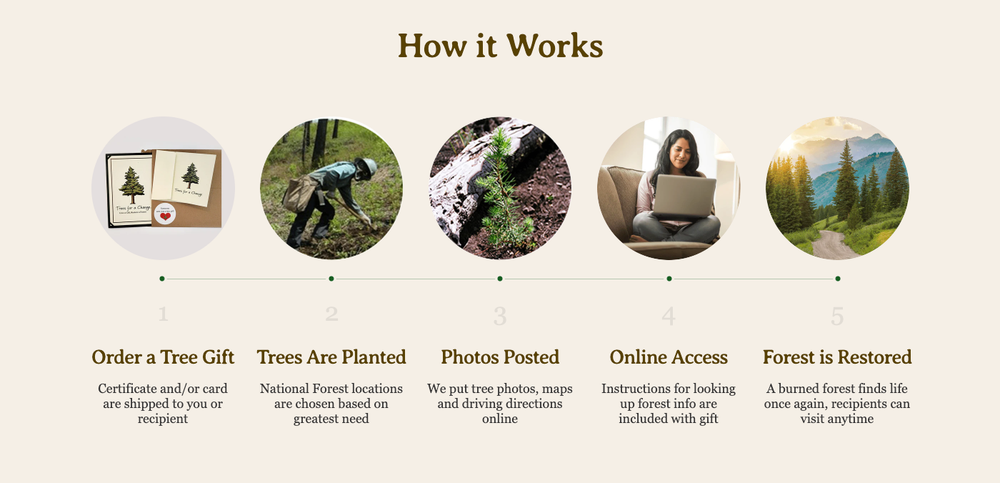
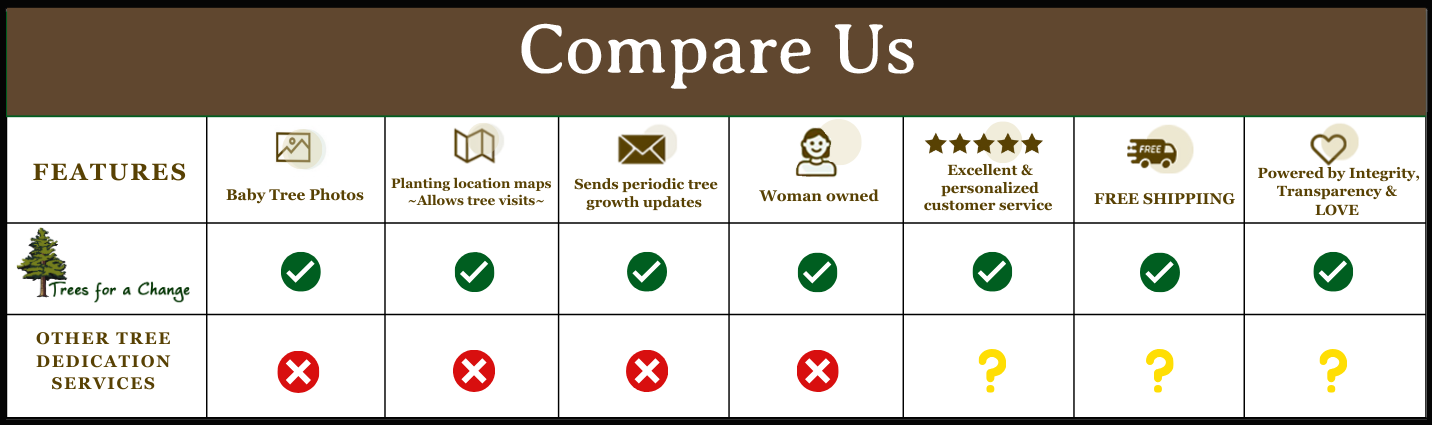
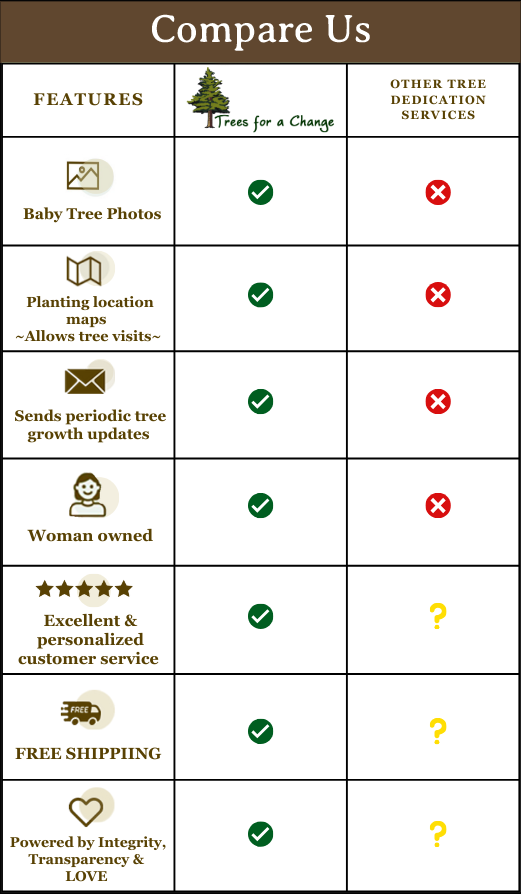
Replanting those areas is done by hand, and much of it is funded by individuals rather than agencies. A tree gift you can plant in a national forest goes to areas identified as needing restoration. Trees for a Change has planted more than 243,000 trees this way since 2007, Giant Sequoia among them, and offers gift recipients photos and map locations so the trees can be visited later.
People can also plant a tree in sympathy as a gift for a loved one who has passed. Thoughtful pet memorial gift ideas do the same as a living tribute for an animal that has passed.
Frequently Asked Questions
Are there redwoods in San Francisco?
Planted ones in city parks, yes. The nearest forest is Reinhardt Redwood Regional Park in Oakland, about 25 minutes away, and the nearest old growth is Muir Woods at about 30 minutes.
Does Muir Woods have giant sequoias?
No. Muir Woods is entirely coastal redwood. The elevation and climate are wrong for giant sequoia, which grows only in the Sierra Nevada between roughly 4,000 and 8,000 feet.
Where are the closest giant sequoias to San Francisco?
Calaveras Big Trees State Park, about two hours and forty minutes east. Planted giant sequoias exist much closer, including one beside a coast redwood and a dawn redwood at Henry Cowell Redwoods State Park.
What is the closest redwood forest to San Francisco?
Reinhardt Redwood Regional Park in the Oakland hills, roughly 25 minutes across the Bay Bridge. It is second growth rather than old growth, and it is free.
Do I need a reservation for Muir Woods?
Yes. Advance parking or shuttle reservations are required and often sell out days ahead. There is no walk-up parking.
What is the best alternative to Muir Woods?
Armstrong Redwoods near Guerneville for old growth without crowds, about two hours away. Purisima Creek above Half Moon Bay for a free, quiet, steeper walk closer to the city.
Are there sequoias in Yellowstone or near Lake Tahoe?
No living ones in either. Yellowstone has fossilised trees, which may explain the confusion, and Lake Tahoe is too high, cold and dry for both redwood species.
Are there redwoods in Big Sur?
Yes, coast redwoods. Big Sur marks the southern end of their entire natural range. There are no giant sequoias there.
Can you see all three redwood species in one place?
Near the Bay Area, yes. A coast redwood, a giant sequoia and a dawn redwood are planted side by side near the entrance of Henry Cowell Redwoods State Park.
Why are there redwoods in the Oakland hills?
It is the driest and most easterly stand in the species range. The original old-growth forest was logged between the 1840s and 1860s, and what stands now is second and third growth sprouted from the old stumps.
The Bottom Line
Coast redwoods are genuinely close to San Francisco. Oakland is 25 minutes away, Muir Woods is 30 if you can get a reservation, and Armstrong Woods at two hours away gives you thousand-year-old trees without the crowds.
Giant sequoias are not close by: Calaveras Big Trees at two hours and forty minutes away is the nearest wild grove. For a planted one, Henry Cowell has all three species standing side by side.
And if you do end up in the Oakland hills, look at the trees and the stumps. Every ring of trees growing up there is standing around the stump of something far larger that was cut to build the city you can see from the ridge.